


Catch-up service:
All Hail the Putter-Togetherers
How Not To Use AI
The Stamina Gap
Has Paul McCartney Read My Book?
How The Mad Men Lost The Plot Again
How To Do Politics When Nobody Knows Anything
I’ll be talking John & Paul with Helen Lewis at Union Chapel, London, next week on February 12. I think there are still some tickets left. The paperback edition of John & Paul is now available.
I’ll be on the BBC R6 Cerys Matthews show tomorrow between 11am and 12pm.
I recently finished my first book of 2026: Middlemarch. You know what, guys? Middlemarch is a really good novel. It took me a while to admit this. I spent the first two hundred or so pages in a grump, partly because it has recently become fashionable to go on about how much you love Middlemarch, and also because Eliot’s style can be quite hard going. Her sentences tend towards the ornate and convoluted, even more so than Henry James, and demand quite a bit of re-reading. Some verge on the pompous.
Middlemarch also takes a while to build momentum. There is, famously, a lot of business - financial, legal, political - in the book. Middlemarch is dense with information about the web of obligation and influence in which its characters are enmeshed, and readers may be forgiven for nodding off during passages on estate cultivation or hospital funding. But Eliot knows what she is doing. Her pacing reminds me of the way that long distance runners husband their resources strategically so as to destroy their opponents in the final lap.
A common problem with novels is that they start with a bang but lose momentum and end with a whimper. Middlemarch takes its time as Eliot sets up its central tensions and conundrums, and moves her characters into place for the book’s climactic crisis - Bulstrode’s disgrace. By the middle of the book I was already enjoyably absorbed, but after the crisis broke Eliot had me in an iron headlock. For the last 200 or so pages I was utterly, helplessly riveted and deeply moved.
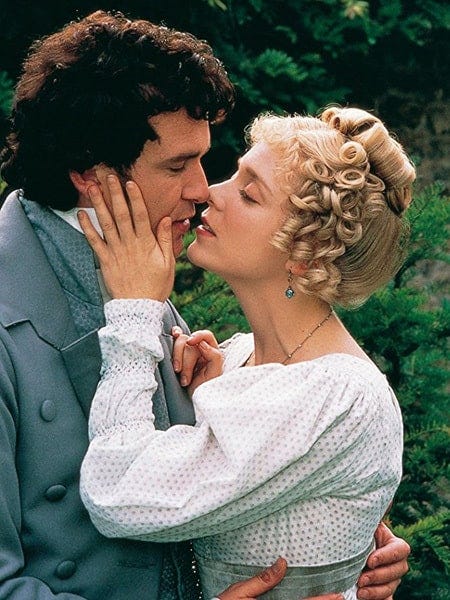
Middlemarch is most interested in its female characters. I like David Frum’s framing of it as a kind of nineteenth century Sex and the City: the story of four women searching for fulfilment and love in different ways. Celia Brooke chooses a conventional path: marriage to a slightly dull but jolly rich baronet. Her sister Dorothea wants a morally meaningful life of service, and is dissatisfied with the options that society offers her. Rosamond Vincy, daughter of a well-to-do manufacturer, desires social elevation and lots of nice things. Mary Garth wants little but a warm home, useful work and a decent husband.
I noticed that Eliot doesn’t treat all four with an even hand. For those who haven’t read Middlemarch, it’s important to know that Eliot isn’t shy of addressing the reader directly. She presents us with little homilies and often discusses her characters at one remove. (The essayistic tendency, common in nineteenth century novels, always strikes me as cheating somehow). So we know where she stands, and she is sympathetic to all of her characters except one. This intriguing irregularity got me thinking about Eliot and about the role that beauty has played in our history, and in human evolution.
The rest of this piece is for paid subscribers only (free trial). Please support The Ruffian, it’s the only way this thing works. Many thanks to those of you who already do. Recommendations, shares and gifts are encouraged. Also after the jump: a Rattle Bag of the fascinating, important, and beautiful.
