


Catch-up service:
Peak Burnham
Podcast: Dan Williams - Is AI Really Going To Kill Us All?
Why Is the Left So Bad at Education?
Why Does Every Society Invent the Same Things?
Seven Rules of Good Conversation
Why I Won’t Reply To Your AI-Generated Email
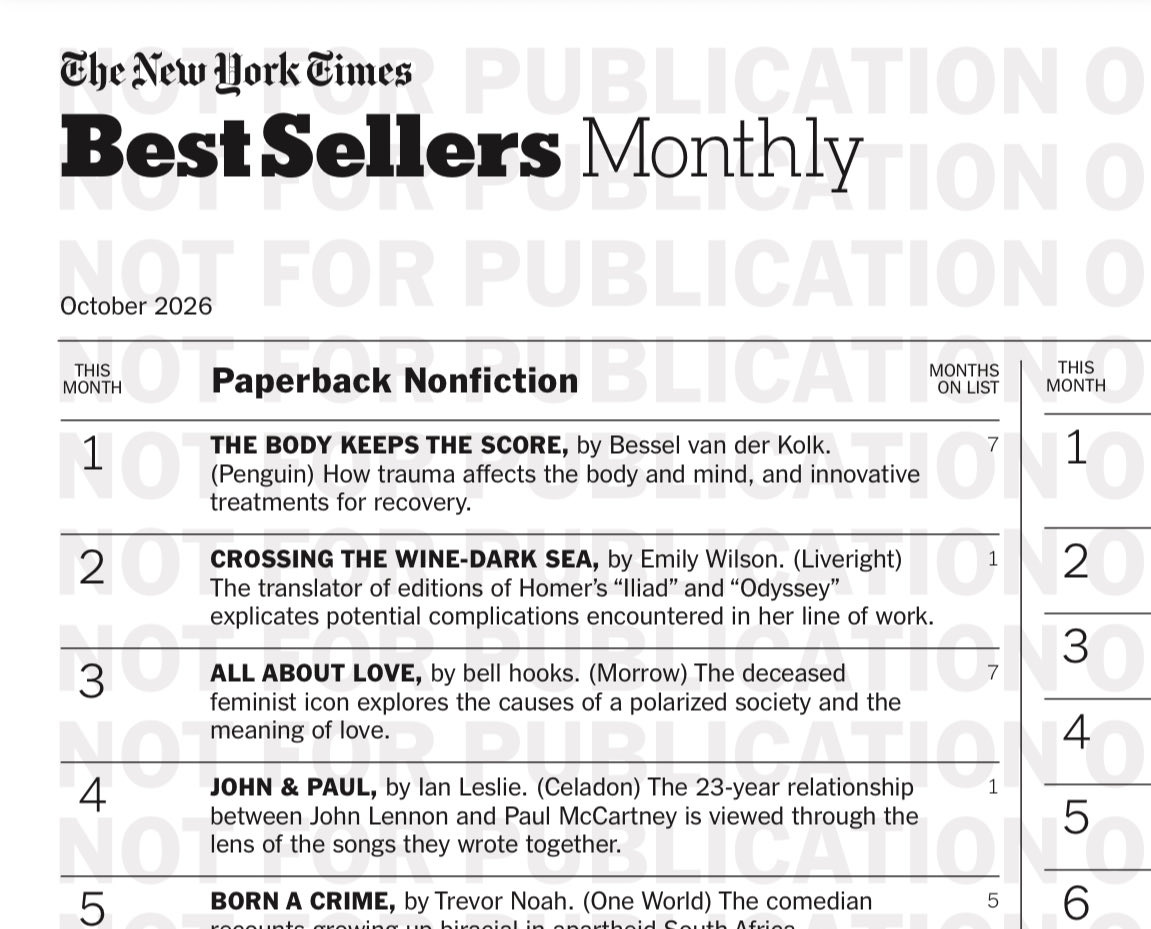
Why Introverts Make the Best ExtrovertsJohn & Paul just came out in paperback in the US and is back in the bestseller lists, hurrah! Get your copy here or from your local bookstore.
A short piece this week but a mahoosive Rattle Bag. You have less than 24 hours to claim a discount on a year’s subscription to The Ruffian…
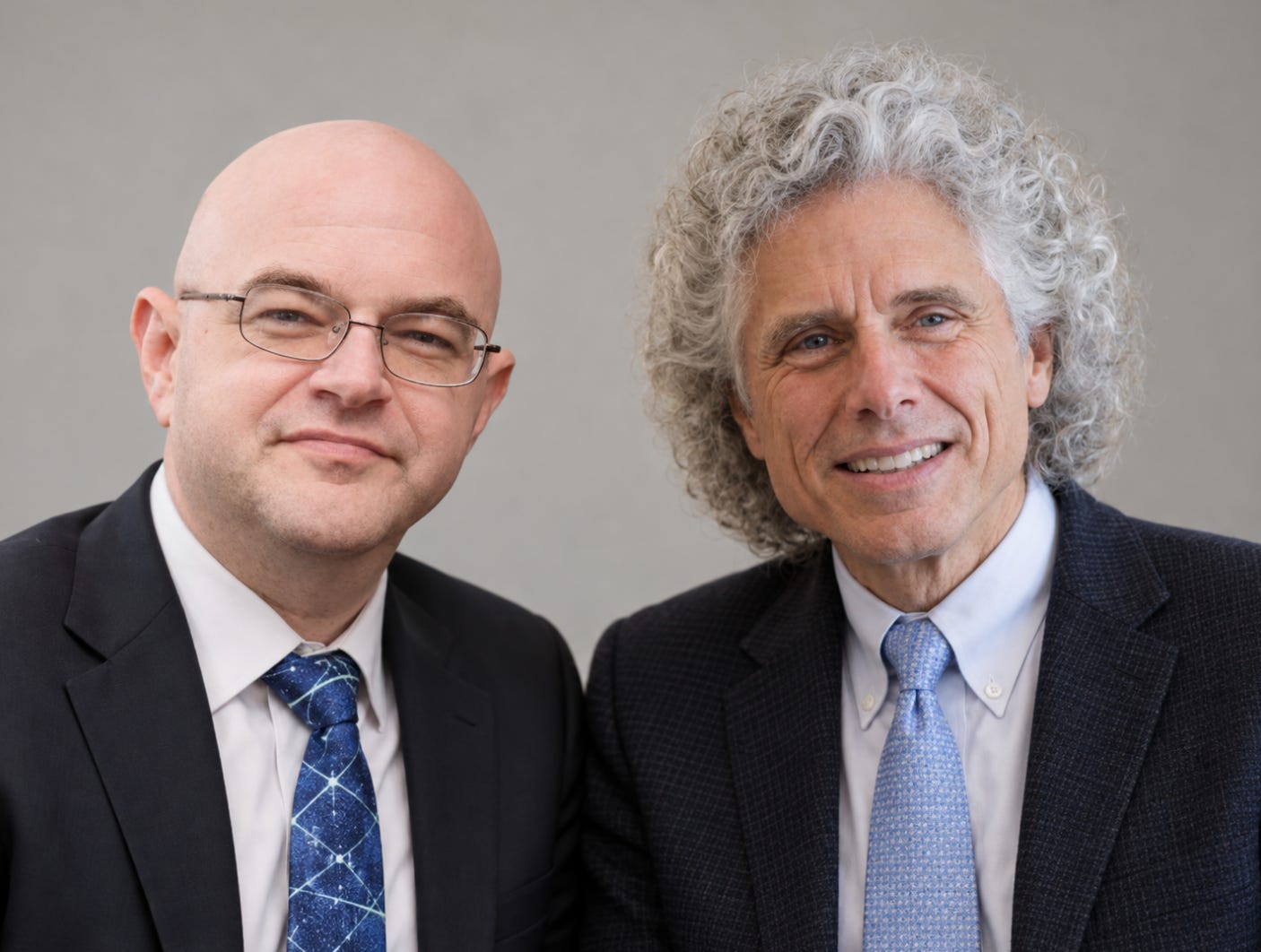
Steven Pinker and Scott Alexander have stumbled into a public debate about existential AI risk. Alexander exploded at Pinker on twitter/X for being consistently dismissive of doomers, like him. He angrily challenged Pinker to an in-person debate, with money on the winner. Pinker didn’t rise to this on twitter but instead published an open letter to Alexander, setting out his case against doomerism. His tone was conciliatory and impeccably civil. Alexander has now replied with a long - very long - post in which he takes Pinker to task for what he perceives to be the shallowness of his arguments, ignorance of the relevant literature, and arrogant dismissal of doomers.
I am not going to get into the content of the debate here, because I want to see it play out first. But I will say something about the different styles of debating employed by the participants. In contrast to Pinker, Alexander, in his article, is pugnacious, petulant, and personal. Pinker tried to take the heat out of the exchange; Alexander turned it up again. He’s received a lot of criticism for this. I have to say, I liked it. I found Pinker’s cool, eminently reasonable style a little unsatisfying, and I’m glad Alexander didn’t feel the need to adopt it.
Let’s remember, they are arguing about whether there is a significant chance our species could be destroyed by its own invention. That seems like something worth getting emotional about. The dryness with which doomers sometimes discuss such possibilities makes them sound mad rather than reasonable. More generally, a satisfying public debate should have a little spice, some electrical charge, even a little irrationality. Not just because that makes it more entertaining for the rest of us, but because it signals there is something at stake beyond victory or defeat in an intellectual game.
It also feels more honest. When you see what makes someone passionate or frustrated or annoyed you’re getting to see who they are and what they care about. Debaters who hide all unruly emotion behind a smooth veneer of civility can seem remote and inscrutable, and difficult to trust. (To be clear, I’m talking about marginal cases like this one, where both participants grasp the essentials of meaningful argument. I’m well aware that our public discourse exactly suffer from an excess of civility or a deficit of emotion.)
Get your petty insecurities out on the table, I say. That’s certainly what Alexander does. In his article, responding to the tweet, Pinker joked about duelling, and said that Alexander writes “as if you are defending your honour”. He assured him, genially, that there is no need for this (honour being a concept alien to most intellectual debates, after all). But in his response, Alexander picked up on this theme and said, yes, actually, this is about honour:
I agree that in-person debates are confrontational and bad for truth-seeking. But I didn’t propose a debate in order to seek truth. I proposed it because, under California Penal Code § 415(1), it’s illegal for me to challenge you to a duel. I think your public writing on this topic has been dishonorable. Out of obligation, I will respond to the meaty arguments that you have set out for me. But what would be viscerally satisfying would be to make you get up on a stage where I read your own words to you in real time and ask “Really? Really?” after each sentence. Then I could watch you squirm as you try to square your output with your status as one of America’s top public intellectuals.
Some people have been appalled by this passage. It’s obvious to me that he’s joking (no, I don’t think Alexander is literally threatening violence). On the other hand, he is also serious. He’s being transparent about how he feels about the way Pinker has engaged - or not - with him and his school of thinkers. That isn’t merely petty; it is an oblique way of saying that Pinker ought to care more about this question than he does.
Emotion can be the enemy of clear thinking, but it can also be its friend. Recall that David Hume didn’t just say that “reason is the slave of the passions”; he said that it is and ought only to be. The passions tell us what to use our powers of reason on in the first place.
Emotions also motivate us to put more effort into our thinking. The Alexander-Pinker exchange bears this out, so far. On the substance of this issue I lean to Pinker’s side but I found his arguments a little shallow and unconvincing. Alexander’s are more detailed, nuanced and thought-through (and while he goes over the top in his parsing of Pinker’s previous statements, he does score some palpable hits there, as when he exposes Pinker’s misreading of the RAND report).
I would say that Alexander’s piece is a better piece of writing, even though it is over-long and overwrought. Pinker is a fine writer but Alexander is a master at combining clarity of exposition with antic wit and ‘voice’. When he takes the reader through complicated concepts you never feel like you’re reading a neutral explainer. He’s always fully present. For all that he’s a tech rationalist, his prose is more richly human than the more elegant Pinkerian style.
Does this mean I agree with Alexander on AI risk? No, not yet anyway. It’s more that Pinker came across as complacent to me. In Round Two, I hope to see him stoop to Alexander’s level and raise his game.
(If you haven’t already listened to my conversation with Dan Williams on this topic, you must. You should also listen to Dan’s interview with Pinker on the same.)
After the jump: a gloriously full Rattle Bag of goodies including Ben Affleck on getting older; how Europe can compete with the US in the age of AI; how to tell if poll respondents are being insincere; the state of Birmingham; the state of Christianity; living with Swifties; my thoughts on Digger…and much more. YOU HAVE LESS THAN 24 HOURS TO CLAIM A DISCOUNT on a year’s subscription:
