


Catch-up service:
Giving Advice Is a Treacherous Business
Against Introspection
Is the Current Gulf War Taking Place?
How To Build Your Own Tower
33 Things I Heard At Foo Camp
A Deep Dive Into ‘I Feel Fine’
Pitfalls of AI Journalism
Last week Meta and Google were found liable by a jury in Los Angeles for harming a young woman’s mental health. The woman, known as Kaley, is 20. She testified that she started using Instagram and YouTube aged 9. “I stopped engaging with family because I was spending all my time on social media,” she said.
At one point she spent 16 hours straight on Instagram. She said she started feeling anxious and depressed from age 10 onwards and has been diagnosed with body dysmorphia. Her lawyers argued that the tech companies bore responsibility for her troubles, since they designed their platforms to be addictive.
It’s not often a British Prime Minister feels compelled to comment on the outcome of an American state-level court case, but Keir Starmer did so. He said the verdict showed the status quo on social media was “not good enough”, using it to highlight his government’s intention to restrict or ban social media for under-16s. The case for tougher regulation of social media is building a head of steam just at the point that it seems to be on the verge of being transformed, for better or for worse, by AI.
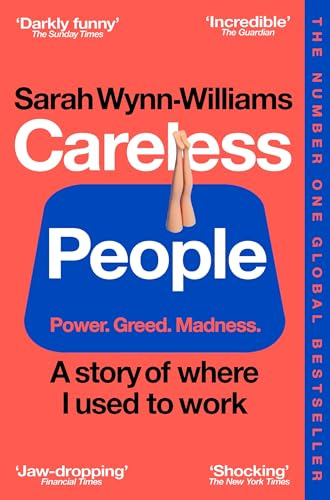
I’ll come back to this court case, but first I want to talk about another blow dealt to Meta’s reputation, this one in the court of public opinion. Sarah Wyn-Williams’s book Careless People was published last year and has been a massive bestseller. It’s the story of an idealistic lawyer and diplomat from New Zealand who joined Facebook early on and rose to a position of influence but became bitterly disillusioned with the company’s ethics.
Wyn-Williams - we’ll call her SWW, her internal tag at Facebook (which later became Meta) - thought she would be helping Facebook change the world for better, as it connected citizens in every country to each other. She came to believe that the opposite was true, mainly because Zuckerberg and his pals were feckless, selfish, and immoral. Her charges against them are multiple, including a blithe tolerance for misogyny and brutal management practices. Her most serious complaint is that they knowingly allowed the platform to become a propaganda vehicle for malign political actors, including Donald Trump, and Myanmar’s military junta.
I suspect Careless People would have sold pretty well in any event but its popularity has been greatly enhanced by Meta’s decision to sue the author. The day before its British release date, a US arbitrator granted Meta an injunction which banned SWW from promoting her book and from saying anything negative about Meta. The ruling doesn’t concern the truth of the book’s claims - it’s not about defamation - but is based on an interpretation of her 2017 severance agreement with Meta.
You might think, hurrah, lucky author, rolling in $$$ thanks to Meta’s stupidity - and without having to do any promotion! (Though book promotion is actually fun, for the most part). That’s what I would have said until I met SWW briefly at a private event (we were both shortlisted for a prize which neither of us won). She was very nice - friendly, unpretentious, funny. She didn’t talk about Meta but she did say how weird it is to have a book out and yet not be able to speak about it in public.
Worse than that, though, her time and mental energy are being almost totally consumed by the legal dispute, which remains unresolved. She has got to know her lawyers very well since she has to spend so much time with them, an she has to pay their fees herself. I didn’t quite grasp the parlous position she is in until reading this piece by her publisher. SWW faces fines of $50,000 for every statement she makes that might be seen as “negative or detrimental” to Meta. These include statements made anywhere, even in the privacy of her own home in Britain. Yes, even speaking to her own family.
If Meta wins the case, those fines may apply to many, many statements in the book and could easily amount to millions of dollars. So not only is SWW engaged in a draining and expensive legal battle every day, she is living under the looming threat of complete financial ruin, pursued by a mega-corporation with bottomless pockets and an apparently remorseless will to destroy her. Her position is not to be envied. When people talk about the bravery of whistleblowers, this is what they mean.
I have a lot of admiration for her as a person and, now that I’ve read the book, as a writer too. Careless People is very entertaining. I recommend you buy it, not just to spite Meta, but because it is enjoyable and fascinating. I do, however, have some criticisms of it, which I make below in my review. In short, I think it greatly exaggerates the case against Zuckerberg and Meta, blaming them for things for which they shouldn’t be held responsible. I suspect this is true of the Los Angeles court case too.
I don’t say any of this of out of sympathy for Meta or Zuckerberg - the way it and he are treating SWW is itself evidence of a company that lacks humanity and wisdom. But the widespread habit of blaming big tech for our social ills, from the deterioration of democracy to the mental health of teenage girls, is crowding out more realistic and honest analyses of our problems. You can think that scapegoating is bad even when you don’t care for the scapegoat.
Careless People is very much a book of two halves. Roughly speaking, the first half covers the author’s background as a UN diplomat for New Zealand; her fascination with the rise of this new media platform; her determination to land a job at a company she foresees will one day be a powerful player in global politics; her initial failure and then her eventual success at getting one, despite nobody at Facebook being quite sure what she will do, since at that point (2011) they were still not thinking of themselves as a company which needed relationships with governments outside America.
It also includes her progress to the centre of power at Facebook, as global corporate diplomacy becomes more and more important to its growth plans. SWW becomes responsible for arranging meetings between Zuckerberg and various heads of state, and getting governments to support the platform’s growth in their country, or at least not to ban or restrict it.
This first half is essentially a savage social comedy. SWW’s account of Facebook’s chaotic and unstoppable growth is brilliantly done, and she has a talent for closely observed satire. We get vividly drawn portraits of senior managers: those at the very top like Zuckerberg and Sheryl Sandberg, but also her immediate bosses, and a whole gallery of supremely ambitious, supremely weird people.
The company is run by a clique of Zuckerberg’s friends from Harvard, who all resemble him in personality. Since it was SWW’s job to arrange meetings with politicians and officials, many of whom are also clever but cold and socially awkward, the potential for excruciating comedy is enormous, and SWW milks it with flair.
Here, to give just one small example, is part of her account of Facebook’s first meeting with representatives of the German government. SWW and her boss, Marne Levine, welcome them to Facebook’s office in Washington DC. The Germans are distrustful of Facebook, associating it with the kind of surveillance they left behind in 1989, so just getting this meeting was a coup for SWW. But it doesn’t go well:
As soon as the German delegation is seated in the meeting room, we start formal introductions. Marne explains her background…at the end of listing her Harvard and government credentials, she concludes with, “And I’m Jewish.”
The room is silent.
”I mean, I don’t bring that up because of the Holocaust.”
Absolute silence. As if every living thing in the meeting room has been frozen. I’m trapped in some terrible parody of diplomacy.
”It’s just I figured you already knew,” she continues. “We can discuss it if you wish?”
They do not wish, and SWW cuts in to move the discussion along.
Careless People is enjoyably bitchy about nearly everyone SWW worked with at Facebook, though in some cases scorn is mixed with praise. Despite hanging her former boss out to dry here she says she liked Marne. Sandberg comes off worse: she is portrayed as tin-eared, self-obsessed, and hypocritical, singing the virtues of female solidarity while making workhorses out of her female staff. In a now well-known scene on a private jet, Sandberg invites SWW to to share a bed with her and gets upset when she declines.1
SWW’s portrayal of Mark Zuckerberg - the most important person at Facebook, and therefore, in theory, the villain of the whole story - is more balanced. She shows him as cold-eyed, irritable, stingy with thanks, and surrounded by aides who let him win at board games, but allows him some redeeming features too.
At first, he is flippant about the diplomatic or political aspect of his job, which doesn’t interest him. But as Facebook’s growth comes to depend on adding users outside America he comes to see how important it is, and leans on SWW to help him navigate this world, a very different realm to Silicon Valley. He becomes interested in his own soft power, as almost a virtual head of state. On a visit to Indonesia, he asks SWW to arrange a ‘riot’ so that he can be ‘gently mobbed’. She obliges. He even instructs staff to help him explore a run for US president (a bizarre episode that I for one had memory-holed).
SWW paints Zuckerberg as both cynical and naive. She shows an ingenuous, childlike side to him, as with the delight he takes in learning Mandarin. There is kindness too. In 2015 she manages to get Zuckerberg a speaking slot at something called the “Global Citizen Festival” in Central Park, attended by sixty thousand people and broadcast live on TV. The bill features Beyoncé, Coldplay, and Big Bird. (SWW makes great play of a scheduling clash with the latter; this whole chapter is the last burst of pure comedy in the book.)
When Zuckerberg goes on stage to address the crowd, there’s a malfunction: a video of him speaking starts to play on a giant screen behind him (his staff had prepared the video in case he didn’t want to speak in person; his assistant submitted it in error). Paralysed by this, all he can do is stare out at his baffled audience, before edging back down the stairs at the side of the stage, still facing the crowd, and sweating profusely (a motif of the book is his over-active sweat glands).
It’s a complete humiliation and you expect him to turn around and blast SWW and his assistant. Instead, once he is backstage, he tells them, “This is my fault”. When SWW tries to take responsibility, he says, “Look Sarah, if I was good at speaking or even improvising, this wouldn’t be a big deal…I need to work on this stuff. It’s me, not you. Really.” He tells her she’s doing an amazing job, a message he reinforces in writing later on.
As the narrative of Careless People enters 2016, the book’s sense of humour more or less disappears, and so does the nuance. Careless People becomes moralistic, prosecutorial and one-note, hammering repeatedly on how appalled SWW is at Facebook’s leadership. She arraigns them for platforming extremists, overriding democratic process, enabling human rights abuses, all in the ruthless pursuit of growth.
If that was what she felt at the time, the reader might wonder why she stayed on in her job, and why she helped Facebook’s leaders court dubious regimes, like the Chinese Communist Party. It’s not that I can’t imagine how a good person might find herself caught up in facilitating something they don’t approve of, but SWW doesn’t give a satisfying account of her thinking other than that she was pregnant with her second child and had share options. Partly because of this, the switch into polemic mode feels contrived.
Much is made out of what seem quite minor incidents. For instance, there’s a story about a Facebook VP in Brazil who gets arrested after WhatsApp (owned by FB) refuses to hand over messages in a drug trafficking case. Zuckerberg wants to publish a note celebrating the bravery of his employee and the company’s refusal to betray the privacy of “our community”. That wouldn’t be wise, since the messages in questions were sent by an alleged drug trafficker. He would also have been jeopardising his employee’s safety by effectively confirming that FB and WhatsApp are the same company.
SWW goes very hard on Zuckerberg’s apparent lapse of judgement. She is “disgusted” with him for even considering such a note. She “truly sees him differently” after this. In fact, she says this is what makes her decide to leave Facebook (at some point).
But Zuckerberg, at least as far as I can tell - the author isn’t explicit on this point - didn’t post the note. He backed down after being warned off it by advisers. (The employee was released after 24 hours in jail). I’m sure it was unwise, maybe even reckless, to even consider it but to me this story just doesn’t justify such a big change in her view of him and the company. In the same chapter she suggests that if Zuckerberg was a good, caring boss, he’d have called Brazil’s president to lobby for his employee’s release - exactly the kind of abuse of democratic process she criticises him for elsewhere.
The slightly unconvincing moralising persists through the rest of the book. Zuckerberg is invited to a summit of world leaders that will take place in Peru shortly after a Zika outbreak there. He is unsure about making the trip because he is trying to conceive a second child with his wife, and Zika can harm unborn children. The official health guidance is to stay away. In the end he agrees to go but on condition Facebook can build a “controlled structure” on the site of the conference, where they can mitigate any risk of infection.
An extreme measure, perhaps, and not unreasonable given his personal circumstances - but SWW is appalled. She likens it to imperial exploitation: “before I know it I’m negotiating with Peruvians for some land near the conference to be dedicated to Facebook”. She says that Facebook had been accused of “digital colonialism” in the past and this was therefore “not a good look”. I would have thought a sensible adviser would say that such accusations could be safely ignored, given the importance of protecting the CEO and his wife from a dangerous illness.
There is a quasi-dramatic scene on the private jet later on in which SWW, by now too tired and disillusioned to worry about upsetting her boss, challenges Zuckerberg directly about his failings as a leader. Rather than getting angry or defensive, he asks her to name a specific example, and she cites his decision not to consider re-naming “internet.org” (an accessibility initiative for developing countries that FB co-sponsored, which was not neutral, as its name suggested, but, at least in part, a way of selling FB services).
Is that it? SWW was probably right that he should have agreed to call internet.org something else. But for our big confrontation moment - the moment our hero speaks truth to power - this seems anti-climactic to the point of bathos, as does Zuckerberg’s response: “That’s fair”. (By the way, this is to SWW’s credit: a less honest narrator might have distorted the encounter to glorify the narrator and condemn Zuckerberg, or indeed not included it at all).
A crucial part of the book’s case against FB is that the company made Donald Trump president in 2016. SWW says Facebook “basically handed the election to Donald Trump”, and, even more nefariously, it “threw the election” to Trump. The problem with this is that it isn’t true, and Careless People doesn’t even try very hard to prove it is. I don’t expect a memoir or a polemic to have the same standards of evidence as work of political science, but I’d like a little more meat on the bones of such a punchy claim.
SWW tells the reader that FB “embedded staff in Trump’s campaign team”. Sounds bad! What the book doesn’t say is that FB also had a team assigned to Hillary Clinton - it offered identical support to both candidates. Like Google and other digital platforms, they were selling their services to high-spending advertisers. This seems like important context.
It’s true that Trump’s campaign made better use of Facebook than Clinton’s campaign, engaged with the FB team more deeply and and spent more on the platform. But those were choices made by the campaigns, not FB. SWW seems mad that Trump was allowed to use FB’s data-based microtargeting to tweak its messaging and raise funds. But that’s what FB does. That’s the business! She omits to mention that Obama made highly effective use of Facebook in 2008 and 2012. Do we say that Facebook “threw” those elections to Obama, or that he won “because of” Facebook?
A narrower version of the book’s claim might be that Trump used the platform in a uniquely dishonest way, and that Facebook allowed him to. But even this is undermined by the lack of a single example of “misinformation” in the book. Nor does Careless People make the case that the Trump campaign was more dishonest than Clinton’s or any other campaigns. Perhaps there is a case to be made there, but even so it would be secondary to the central claim on which this whole section rests.
In full polemic mode, SWW says she can’t imagine how she’d would feel if she created the company that enabled Trump to win the presidency: “I honestly think I’d have a nervous breakdown…It’s so ugly. What a thing to be responsible for.” Let’s remember, we are talking about a democratic election here, not some atrocity. But anyway, the central claim is false. Trump didn’t win the election because of Facebook.
Advertising campaigns, for all the vast amounts of money that candidates spend on them, generally make little difference to electoral outcomes. We should be suspicious of any claims that they are decisive, even though it’s in the interests of campaign operatives and media owners to say they are. There’s no evidence that 2016 was any different. As far as researchers can tell, Trump-supporting misinformation did not change minds.
The definitive account of the 2016 election, by three political scientists, gives short-to-no shrift to the Facebook dunnit view. Unorthodox as he was Trump won (the electoral college) for normal reasons: voters like to switch parties after two terms; his opponent was very unpopular; voters were angry about illegal immigration. He also dominated the media, but the most crucial channel in that regard was TV.
Careless People is on firmer ground when it comes to the final crisis of the book: the genocide in Myanmar. In late 2016 the country’s military junta incited mass violence against the minority Rohingya Muslims, resulting in tens of thousands of deaths. Anti-Rohingya propaganda and hate speech spread online, through Facebook. Almost the whole of the internet-connected population used it, because the company was ‘first in’ when the government liberalised internet access, thanks in part to SWW’s efforts.
The regime exploited the FB algorithm to seed and spread lies about the Rohingya. Meanwhile, FB devoted almost no staff to moderating content in the country, despite repeated warnings from SWW and others that it should. That was a genuine dereliction of duty. It doesn’t mean that FB caused the genocide, or that the genocide wouldn’t have happened without it - the historical roots of the violence go deep, and it’s hard to imagine that better content moderation would have averted it.
But the platform does seem to have contributed to the conditions for the violence and even intensified it, albeit inadvertently. You can see that Zuckerberg’s attention would have been elsewhere - the company made very little money in the country. He and his senior team would have had plenty of higher priorities to focus on than the rumblings of a country of which they knew very little. The underlying issue is that Zuckerberg has always been unwilling to accept responsibility for how FB is used, rather than just for the services it offers.
This at the core of the recent US court case too. Was Facebook/Meta responsible for Kaley’s sixteen hour stint on Instagram, or for her social media-induced isolation from her family? I don’t know enough about the case to have a firm opinion on it, but my general instinct is that however clever, sophisticated and appealing these apps are, they are not overpoweringly magical amulets which users cannot resist. Calling it addictive, rather than habit-forming, seems highly dubious to me.
In its response to the verdict, Meta said: “Teen mental health is profoundly complex and cannot be linked to a single app.” I agree with this. Bad teen mental health can’t even be linked to a particular form of media. Analogies with tobacco are facile and misleading; the evidence that cigarettes do harm is much, much stronger than the case against social media (and even the latter’s strongest critics don’t claim it gives you cancer). These apps are just one aspect of the user’s environment and even when they contribute to bad mental health, they’re less important than other causes, like genetics, chronic stress, or abusive relationships.
None of this is to say that social media use shouldn’t be constrained or regulated by parents, schools or governments. Personally I think it should. But this tendency to blame society’s ills, from Trump to depression to genocide, on, not just one form of media, but one bad company, even one bad man, should be resisted. Mark Zuckerberg is lacking in empathy, imagination and taste, and, like many CEOs, it’s hard to see what he cares about other than winning. But he’s not evil and I don’t think the last ten years would have gone better if Facebook had been under different management. He was under-prepared for the social and political consequences of connecting everyone in the world to everyone else. But weren’t we all?
Sorry this is so long; I didn’t have time to make it shorter. The Rattle Bag will return next week!
SWW is content to be ambiguous about what she thought was going on here. Sandberg apparently shared the bed with a few of her staff and liked to buy them lingerie. Was this sexual harassment, or some kind of manipulation? SWW doesn’t say. For what it’s worth, someone who used to work with Sandberg told me his guess was almost certainly not. He thought it much more likely that Sandberg, whom he recalled as being in a constant struggle to overcome her essential social awkwardness, was making clumsy attempts to ‘hang with the girls’. (An anonymous former employee who was on the plane told NBC News she thought Sandberg was trying to get SWW, who was pregnant, to rest.)
I picked up this book last year because of a really decent review in The Financial Times (worth noting the author’s husband works there). And while I agree with much of your analysis of the book’s flaws and the harsh legal action against SWW, I don’t share your view that it’s entertaining. I found it unnecessarily bitchy throughout.
Most striking is the extraordinary gap between how SWW presents herself and how she actually comes across. She repeatedly declares her diplomatic credentials — “I insist I know what I’m talking about, and given my years as a diplomat” — and pitches her role as someone who builds relationships before Facebook needs them. Yet the book is full of moments where she seems spectacularly out of her depth.
Take Myanmar, which becomes the moral centrepiece of the whole book. She flies out there because “someone needs to figure out what is going on.” Clearly, she’s the person for the job! She checks into a hotel with no electricity, no hot water, no food, and no internet. Seriously. It’s not like Myanmar didn’t offer hotels with these essentials for any diplomat or visitor to the country after all, the country was hosting a World Economic Forum event at that time! To her credit she secures a chat with Ang San Suu Kyi because her “diplomatic training” helped her locate the seating map! Honestly, I laughed out loud. When she leaves the hotel, she is incapable of arranging transport, considers hitchhiking on an empty road, has no local currency, no local language knowledge, jumps into a random car, and then tries to write down the name of a government department before remembering that Burmese uses a different script and has to resort to sign language and mime. FFS!
This isn’t the behaviour of a seasoned diplomat. It’s Murray from Flight of the Conchords! The comparison kept nagging at me throughout the book. She tells us she’s brilliant at diplomacy while showing us scene after scene of incompetence. She may well be likeable in person, but as an author, she’s strangely unaware of how these anecdotes, as well as the meanness and unnecessary bitchiness about others undermine her own authority.
Hi Ian. Just wanted to say that as well as enjoying the substack, I've got a lot out of reading your book 'Conflicted'.
I'm finding I'm having more interesting and stimulating conversations, especially as I'm no longer viewing them as a zero-sum game where my opinion must prevail for it to be successful. It means I can go into a conversation with curiosity and a readiness to be challenged and develop my views, without the need to be on the defensiveness from the start.
Thank you.