



Catch-up service:
What the Fuck Are We Talking About When We Talk about Love?
Arteta vs Guardiola
Moon Joy
How Evil Is Mark Zuckerberg?
Giving Advice Is a Treacherous Business
Against Introspection
Is the Current Gulf War Taking Place?
Scarlett Maguire, a pollster and one of Britain’s smartest political analysts, has issued a wake-up call to centrists. The centre is not where they think it is. Centrists are used to thinking of themselves as the inhabitants of a lush and large tract of land called “The Centre Ground”, with everyone else scrabbling around the edges. In fact, the centrists are isolated on a scrubby little verge in the middle of a motorway.
According to her data, the politicians who think of themselves as centrists are pitching to a group of voters - she calls them “liberal institutionalists” - who make up only 5% of voters. What is a liberal institutionalist? Think pro-Remain Tories, ageing Blairites. More specifically: voters who believe in a smaller state; who trust institutions and the mainstream media; who trust government; who are pro-business, pro-immigration (with controls), and loosely pro-globalisation.
This describes me, more or less. Me and about seven other voters, apparently. It is actually quite exciting to find out I’m in a tiny minority. Perhaps my very boring and vanilla brand of politics has finally become interesting and radical. Am I an extremist now?
I don’t know if I can claim that quite yet. I do accept, however, that whoever the median voter is, it’s not The Ruffian. Who is it then? According to this data, the median voter distrusts politicians; wants change; backs deportations; wants large reduction in legal migration; favours a wealth tax and wage ratios, is anti big-business. But also dislikes inflammatory rhetoric; worries about an unstable world; wants to see solutions over political point-scoring.
Let me get this straight: the median voter distrusts conventional politicians and most non-conventional politicians. They want lower taxes on their household and higher taxes on the rich. They want to cut public spending but only on migrants and scroungers. They want higher living standards, tougher regulation on big business, and much lower immigration. Oh and they’re also a big fan of pragmatic solutions. Sure.
In short, the median voter is all over the place. He or she holds what centrists would consider “extreme” views, and these views come in strange combinations. This is hard to swallow for centrists on both right and left.
Those on the right haven’t yet come to terms with how far left the electorate has shifted on economics. Many voters are under the impression that if we squeeze the rich and hit big business, we can pay for everything. Having lived through the financial crisis and austerity, they still believe that public spending is cut to the bone, and that we live in an era of rising inequality, when if anything the opposite is true. They’re not aware that Britain has the most progressive tax system in the developed world.
Similarly, politicians on the left have found it hard to accept how far they are from the median voter when it comes to immigration. The public isn’t satisfied with higher immigration, as long as it’s controlled and managed - the boilerplate position of even right-wing Labour MPs. Voters are furious about the relatively small numbers of illegal immigrants and want (or at least say they want) to cut legal immigration too. Left-wing politicians and commentators paint Shabana Mahmood as some kind of neo-fascist when in fact her position on this issue is well to the left of the median voter.
In fact, all politicians with ambitions to govern are in a tough spot, since the median voter is not only charmingly inconsistent but also under some serious misapprehensions.
According to Scarlett Maguire and other pollsters over the last few years, voters are surprised to be told that we spend more on welfare than we take in income tax, or that we still have a huge Covid bill to pay off. They think we can spend more on the NHS and Defence if we just cut the salaries of MPs (or something). They think serious crime is rising, not falling. They have been allowed to forget that if you want higher living standards and better services, then the economy has to grow, which means big business has to thrive.
I don’t think this makes the country “ungovernable” but it certainly raises the difficulty level. You can see why even mainstream politicians are giving up on the median voter and targeting their base, or at least their ‘bloc’. The smaller the target group, the more internal consistency there is, the easier it is to shape a coherent set of messages. The trouble is that to win power - or enough power to get things done - you still have to win over voters and stakeholders from beyond your bloc, and you still have to adopt policies with a chance of working.
You might be able to impose a wealth tax on the very rich, for instance, but you’d soon find it would raise very little while slowing growth. You might slash immigration, but the NHS would collapse and GDP growth would be stymied. You might promise to spend more on lots of things but you will soon face a fiscal crisis. Pick your own examples of fantasy smashing into reality, but the most obvious one is playing out as we speak. A party that came into power on the impossible promise that it wouldn’t raise taxes but would deliver improvements in public services is now widely despised for its dishonesty. Was it worth it?
I want to try and rescue centrism, but first I’ll say what I mean by it, starting with what I don’t mean.
Interpreted literally, “centrism” means aiming for the middle point of the political spectrum. Scarlett’s analysis suggests that it isn’t a viable approach anymore. I’m not sure it ever was. When the canonical centrists, like Blair or Cameron, talked about aiming for the centre ground, it meant compensating for the bias of their own party by pulling in the opposite direction, in order to reach voters who weren’t naturally aligned with them.
So Blair emphasised wealth creation and crime, Cameron social liberalism, and so on. Yes, they sought to stay close to the median voter, but it was a little more subtle than finding the middle point in a distribution and putting a flag on it. A strategy that merely tries to win back voters lost to more extreme competitors is a failure of ambition; the main parties should still be reaching to the other side as well as shoring up their flanks.
People who use the label “centrist” derisively (which is most people) use it to mean “starting with what the median voter wants and working back to political positioning”, or less kindly, “hollow opportunism”. Again, this isn’t true of Blair or Cameron, who were both true believers in their political missions, in some ways to a fault. There was actual content to their platforms: they had a philosophy, they had ideas, they had policies they wanted to see through. (Conversely, I don’t think of Robert Jenrick or J.D. Vance as centrists, even though they are plainly opportunists.)
A more charitable interpretation of the term is that it means “ambitious about winning power by winning over voters from beyond my base and then governing effectively, in a way that consolidates and expands my coalition”. (OK, not a great bumper sticker). Governing effectively will and should mean different things to different leaders, but centrism doesn’t set the direction. It’s a political method, not a philosophy. You need both.
Looked at this way, centrism isn’t dead, it just needs updating. It needs a lot of updating.
“Centrism” is nothing without seriousness about governing, and on that count the centrists have, as Stalin said when the Germans invaded, “fucked it up”. Oh boy, have they fucked it up. Supposedly centrist leaders have presided over political chaos and national stagnation, which they have not only failed to alleviate but actively made worse. If the notion of a reassuringly competent Prime Minister, supported or at least accepted by the whole country, still resonated in 2024, it means less than nothing now.
The incumbent is like a custom-designed bot created to expose centrism as a lie. Starmer really is a hollow opportunist with no principles and no ideas. He really did rise to power in a mechanical way, sending two different messages to two different electorates without believing in either. All this might not have mattered if he then proved an effective PM. As it is, he is a shopping trolley in the guise of a technocrat; Boris Johnson without the bonhomie: weaving from side to side, pushed by whoever last took the handle, smashing into whoever happens to be nearby.
Still, painfully inadequate as both the Labour Party and the Tory Party have been, they remain the least bad options available. Despite some half-hearted efforts to get serious, Reform is still teeming with cranks, like the doctor who believes that vaccines cause cancer, and Suella Braverman. The Green Party wants to pull out of NATO, unilaterally disarm, kill GDP growth and legalise all drugs. Ed Davey - no.
That means centrism has to be revived. After all, it is the raison d’être of the main parties: their appeal to voters rests on a claim to be less extreme and more competent than the populists. To restore authority to that claim they will have to update their calcified assumptions about who the median voter really is, and to mercilessly interrogate their own thinking about what the country needs. They should be as critical of established wisdom, which means their wisdom, as the populists are. They have to understand and share the anger that voters feel about certain problems without letting it make them stupid.
Centrists, whichever party they’re from, will have to settle on a policy platform that tells and is framed by a coherent story about where Britain is now and where it needs to go. They will need to believe in it from the depths of their being, having sweated over it. Ideally they will have arrived at it through argument, so that they are fully aware of the case against, and have their enemies and potential converts in plain sight.1
To win elections, they will need to tell voters they’re right, for the most part, but centrists can’t substitute dishonesty for persuasion, where persuasion is necessary. Voters must be brought to understand that the only way to permanently reduce the cost of living is to increase growth, and that we can’t go on spending what we aren’t making.
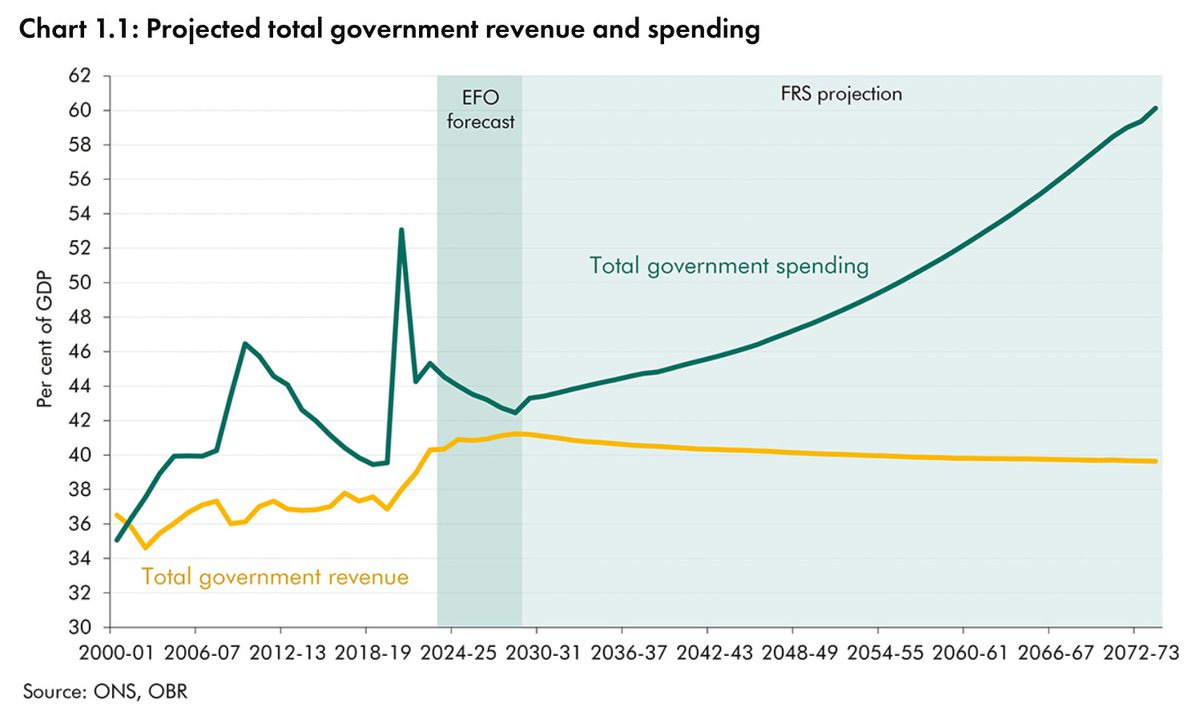
Centrists will need to project urgency about the direness of our national predicament, something they tend to be poor at, since they came of age in more serene times and fancy themselves as calm hands on the tiller. They must not just project urgency, but feel it. The first error of the Starmer government was failing to cut short the 2024 summer recess. Some ministers have been rather too attached to their holidays, constituency work, family time. If the country is not in a crisis already, our leaders need to act as if it is.
The initial challenge is to demonstrate that the state can still do things. This is another sense in which centrists desperately need to update their mental model of politics. They need to recognise that one of Britain’s biggest problems is government itself, and that the proper response to this is not to complain about levers that don’t work or recalcitrant civil servants, but to have a bloody plan for power. A plan for the first week, the first month, the first year. Reality has a plan of its own, after all, and it is coming for you.
The populists have a vision but no plan. Starmer had neither. Whoever succeeds him, in the short or longer term, better have both.
Which brings me, seamlessly, to Michelangelo. (And after that, a Rattle Bag of excellent things - come on in…).
