


Catch-up service:
All the Photos I Couldn’t Use For ‘John & Paul’
Why Writers Should Use AI More
Pod: Cass Sunstein on the politics of the Beatles
Pain Is a Mind Game
Who The Hell Is Wesley Streeting?
Thinking By Hand
Lucky for you I was on holiday last week, otherwise this might have been an actual essay.
For those of you blissfully unaware: last week Tony Blair published a 6k word essay about where Labour is going wrong. He followed it up with a media round. The result was an entire discourse explosion; endless counter-essays, interviews, podcasts, columns, posts. The current Prime Minister and the two most likely candidates to succeed him felt compelled to write lengthy pieces in response.
That a man who left political office almost twenty years ago can still bend elite discourse to his will is partly because he is polarising and therefore perfect for the age of outrage. But it’s not just that; it’s also because he has something interesting to say - a rare commodity in British politics.
The essay’s political philosophy is shallow. It makes sweeping assertions that are hard to stand up. It fails to address the current political landscape in any detail. It is also head and shoulders above anything written by any current Labour politician, before or after its publication. In that sense it succeeded in its minimal task. It has exposed the problem that has been obscured by all the leadership chatter: Labour isn’t thinking.
The response from Labour MPs and left-wing pundits has for the most part been defensive, sneering, and superficial. Much of it is ad hominem. I suspect it is rooted in insecurity. I want to say to these people: calm down. Be more confident. If Blair’s piece is outdated, irrelevant and compromised, as you claim, then you can happily ignore it and him. If, however, he makes important points, then why not acknowledge them, before moving on to what he gets wrong or misses out?
I don’t believe Blair set out to convert his party to a particular political strategy or policy program. He just wants it to grow up and get serious about the problems facing the country. It’s spectacularly pointless to insult him or to loudly declare “nothing to see here”, just as it would be useless to pretend his piece provides answers to all Labour’s problems. The point is to use his piece to improve your thinking and your arguments. That’s how productive political debate is meant to work. It’s called the dialectical method, comrades.
It is Blair’s style of argument, as much as the argument itself, which matters. The way he starts from first principles (what is Labour for?) and moves from step to logical step, expressing his ideas cleanly and simply. The way he takes care to separate policy from political strategy from tactics and communication. The way he looks outwards to the world rather than inwards to the party. The way he is excited about the future rather than nostalgic for the past. The way he assumes that the right policies will be good for everyone and not just for ‘our people’.
Many Labour people have forgotten how to argue in this manner, if they ever learnt it. And anyway, they don’t want to have to think through the difficult and unpleasant things that come with the responsibility of governing. How many Labour MPs have done real thinking about how to help the private sector create wealth; how to give our AI sector a fighting chance; how to cut the welfare bill? How many of them have thought deeply about Britain’s economic and diplomatic relationship with China; about our defence capabilities, or our energy strategy, or about how all these questions interact? No - they would much rather sing the old songs about inequality and neo-liberalism and propose more ways to redistribute all the income we don’t have, while taking pot shots at colleagues.
Blair is asking Labour MPs and ministers to engage intelligently on these questions and others - questions which, even two years into government, they have mostly failed to confront or even consider in depth. That’s the reason so many of them find his piece so bothersome. It reminds them that they know and care too little about the job they’re supposed to be doing.
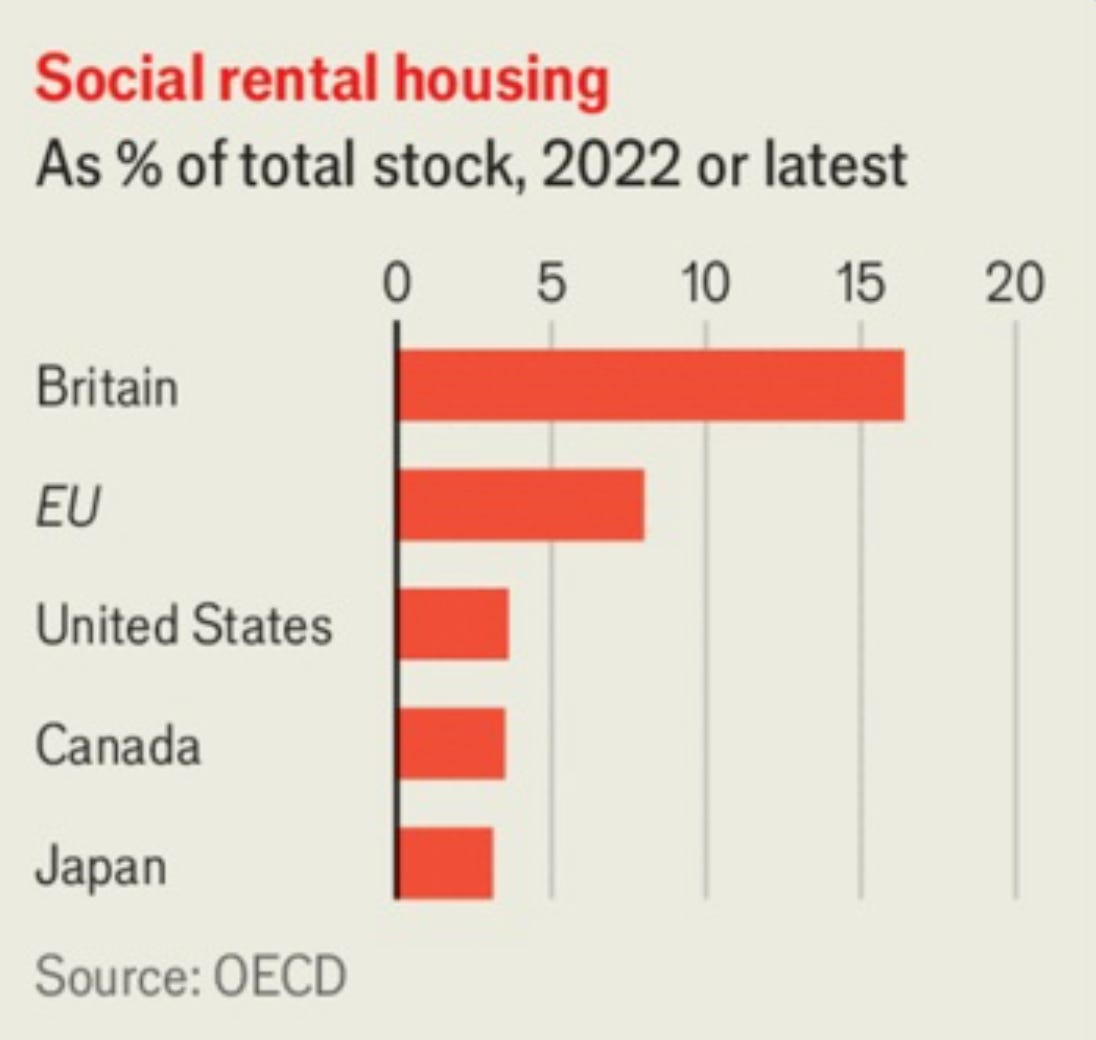
The most worrying thing about the responses is that they reveal quite how much Labour politicians are now operating in an alternative reality. Burnham thinks the cause of Britain’s housing crisis is that Thatcher sold off council houses. This is so wrong it’s hard to know where to start, but a simple refutation is that we already have an exceptionally high proportion of social housing. If you want to make this argument, you have to explain this fact.
Or take Burnham’s “forty years of neo-liberalism” line which he stubbornly repeats after Blair called him on it, or Streeting’s contention that inequality is the most urgent problem we face. British income inequality is the lowest it has been since 1986.
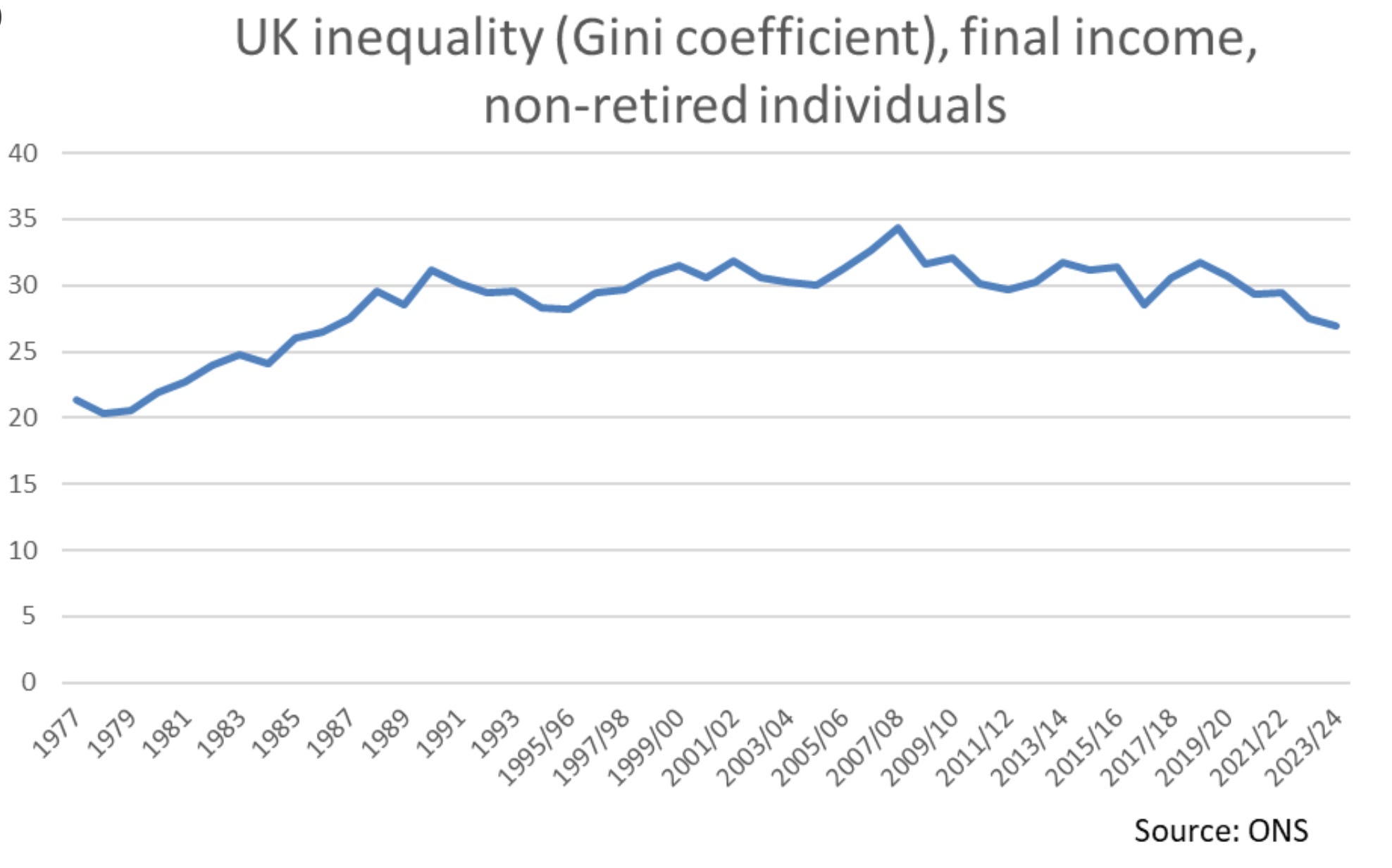
Wealth inequality is higher but it’s driven by an ageing population and sky-high house prices (and thus housing shortage). Burnham cites the financial crisis, rightly, as a pivotal economic disaster for us. But the share of income flowing to the richest 1% is now lower than it was in 2008. The tax system is much more redistributive than it was at the start of the century, partly due to fiscal drag, and is one of the most progressive in Europe. The top 1% pay a substantially greater share of income tax than they did twenty years ago.1
We have one of the highest statutory minimum wages in the world relative to average income. It is set at 65% of the median British income, higher than the EU average. Our housing and energy sectors are struggling under accumulated weight of regulations that have been accreting for decades. Our biggest supermarket is currently fighting, and so far losing, a legal battle to pay different wages to workers doing different jobs, because it somehow contravenes Labour’s equality legislation.
I know “neo-liberalism” is a baggy concept, but can it really stretch this far?
Of course not. It’s just a slogan or buzzword used to avoid thinking about the hard questions. Voters are feeling miserable because their living standards aren’t rising. But that's not because all the income is going to the rich, and it’s not because the government isn’t taxing or regulating enough. It’s because their incomes aren’t rising. And that’s because they’re living in a low growth country.
To his credit, Burnham at least adopted the right tone in his essay. He welcomed Blair’s intervention and praised his piece. He didn’t sound put out or threatened by it, even if his own ideas fell woefully short of convincing. Starmer was civil, though his piece revealed the same blind spots he has exhibited as Prime Minister, and he is anyway beyond redemption at this point. Wes Streeting adopted the most petulant tone of all three, perhaps because he fears being associated with Blair. That might have been excusable if he had anything of substance to say but to me his piece reinforced the impression of a talented tactician who hasn’t matured at the rate that his fans, including me, hoped he would.
Tony Blair doesn’t have all the answers to Labour’s predicament or to Britain’s malaise. But he’s asking better questions than anyone else.
It’s not just the super-rich paying more; anyone earning over £200k now pays more in tax than they did in 2009. The dirty secret of our political discourse is that only middle-income workers can be said to be under-taxed.
You are so so right about all this Ian. I know Blair a little bit from when I was working for TBI in Sierra Leone. Maybe one of his greatest skills is a clear assessment of what the situation actually is, not what ideological convictions or whatever dictate it is, and a *very* realistic approach about doing something about it.
Well yes. It's well past time we faced the music.
There are two obvious smell tests:
1. "We can muddle through without radical change" and
2. "We fearlessly gave the need for radical change. But don't worry: somebody else will pay for it…"
I'm still waiting for:
"This is what we need to do. It's going to hurt. And this is why it isn't going to be a catastrophe for people like you".