


This week, the provost of an Ivy League university was forced to resign over his use of AI. Santiago Schnell, a maths professor, was provost (chief academic officer) of Dartmouth College. His problems began when a Semafor report on the use of AI in newspaper opinion pieces flagged one by him as 100% AI-written.
Schnell’s column was itself about AI. It argues that universities must learn to distinguish between the work a student produces and the capacities of the student; a statement of the obvious in 900 almost unreadably dull words. I’m not sure I would have clocked it as AI-written, but then I don’t think I would have got beyond the first paragraph. (AI-generated pieces are either nervously attention-grabbing or, like this one, blandly anonymous.)
Dartmouth’s student newspaper decided to follow up on Semafor’s report. Using Pangram, it found that all nine of Schnell’s published articles this year, including two co-authored academic papers, were overwhelmingly AI-written. (His pre-2022 work was found to be completely human-written.) When the students contacted Schnell to ask him about this, he emailed a statement that was itself 100% AI-written.
As an institution, Dartmouth has been enthusiastic about AI. Its president, Sian Beilock, published an essay entitled “Why I Want More AI at Dartmouth” which argued that universities must embrace this technology. The college’s policy requires students to acknowledge any use of AI in their work, which made Schnell’s behaviour look quite hypocritical. Beilock launched an investigation into him which concluded that he hadn’t been sufficiently forthcoming, and, facing a no-confidence vote from faculty, he resigned.
The internal politics of universities are terrifying and I am not sure whether Schnell should have lost his job over this. There is the mitigating factor that English is not his first language (he is from Venezuela). More importantly, as the philosopher Jennifer Frey puts it, higher education is in a “Wild West” moment on AI. Rules and norms are not clear or settled; perhaps everyone should be cut a little slack until they are.
Anyway, I’m more interested in Schnell’s defence of his AI usage. In his email statement, he said he views LLMs as “assistive tools” and denied that they were doing his work for him. They “do not identify the problem, design the research project, guarantee the validity of research results, interpretations, citations, conclusions or substitute for my research, intellectual judgment or authorship.”
This is a common story from people who use AI to write or create intellectual work of some kind, usually after they have been criticised for doing so. Schnell’s defence was written in an academic context, but you hear essentially the same justification from people who post LLM slop on LinkedIn and get called out for it. The argument is that “the thinking and the ideas are mine; the AI merely assisted me with execution.” It’s superficially plausible but I don’t find it robust, and I think people who believe in it are setting a trap for themselves.
It’s not that I believe any use of AI in composition undermines the integrity of a piece of writing. I use LLMs to proofread my copy, for instance, and for research. But it’s harder to distinguish between the intellectual content of a piece of work and its expression than the Schnell-style defence allows for. Writing and thinking are deeply intertwined. If AI is used heavily in the drafting stage, or even in the brainstorming stage, then the author can’t really claim the finished piece as their own. They might feel like they did the thinking, but they will be deceiving themselves, and therefore the reader. I believe this intuitively, but a new study from researchers at Anthropic provides some empirical support.
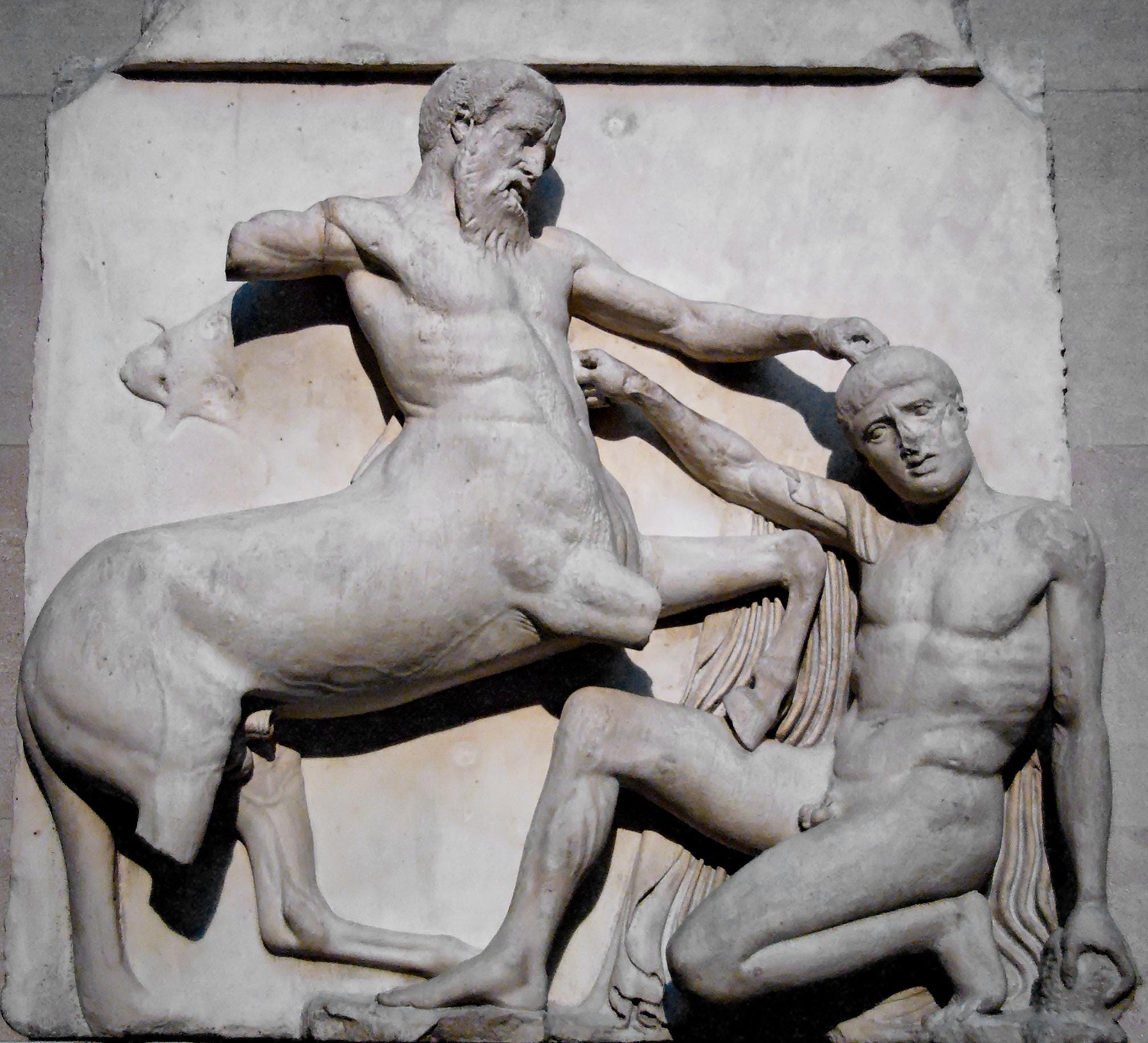
After the jump: why I don’t believe in the “centaur” theory of human-AI collaboration, plus a truly glorious Rattle Bag, bursting at the seams with good stuff on the great French fridge hack; the biomechanics of kissing; restaurant economics; history’s great escapes, and much, much more. Paid subscribers make The Ruffian possible. If you’re a reader but you haven’t signed up yet, please consider it.
