


Catch-up service:
Has Paul McCartney Read My Book?
Best of The Ruffian 2025
How The Mad Men Lost The Plot Again
How To Do Politics When Nobody Knows Anything
When The Mind Outlasts the Brain
How To Choose Your Nemesis
My Ten Favourite Books of the Year
I’ll be talking John & Paul at Stoller Hall in Manchester on February 3 and with Helen Lewis at Union Chapel, London, on February 12. Book your tickets now!
I don’t always take my own advice but in 2025 I did indeed read more books. At the start of the year I read Vikram Seth’s A Suitable Boy - about fifteen hundred pages, thanks for asking, and about a million characters to keep in your head. I hadn’t read a properly long novel in a while; this was a great way to get back into it. I was then emboldened to tackle a few other big novels, like The Portrait of a Lady and Anna Karenina. It was like I’d increased my brain’s aerobic capacity with that initial effort, and the benefits compounded over the months to come.
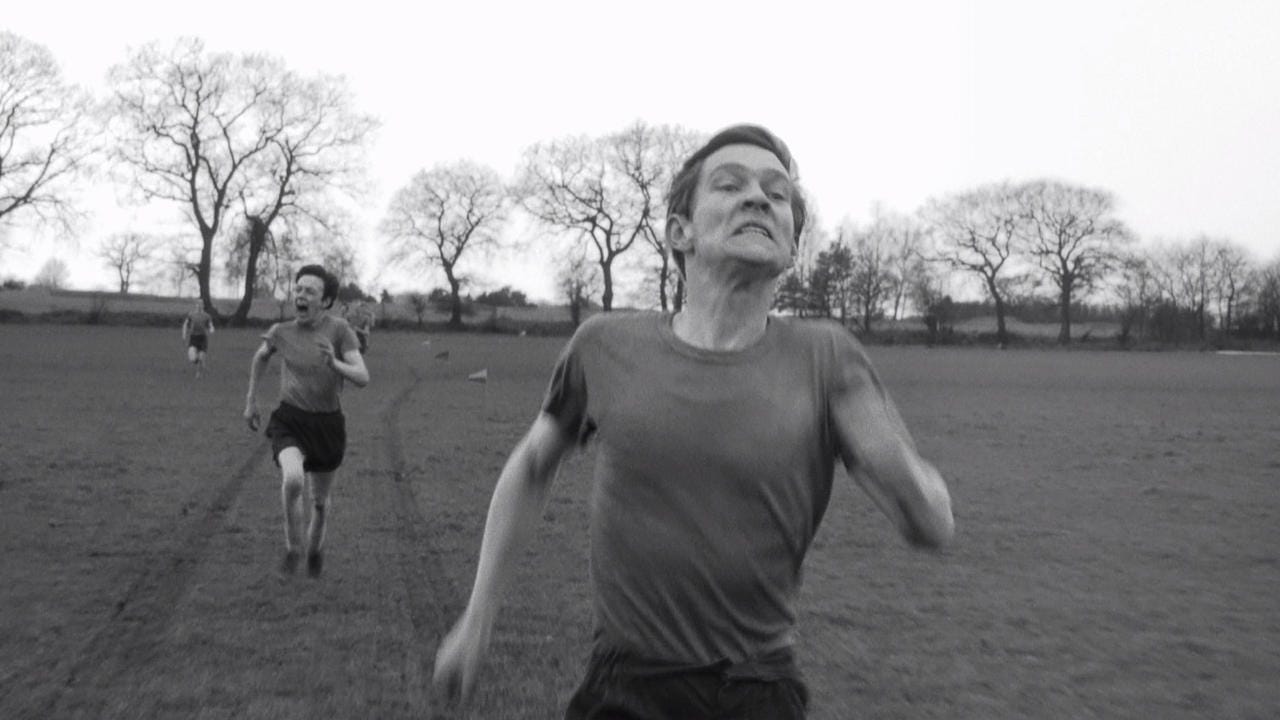
In fact, maintaining the ability to read complex books is akin to keeping a physical exercise regime. Physiologists talk about two different types of muscle fibre: fast-twitch and slow-twitch. Fast-twitch fibres contract quickly, and help us with short, high-load tasks like lifting a weight or sprinting. They’re highly responsive but tire quickly. Slow-twitch muscles contract more slowly but tire slowly too. They’re good for sustained, low-intensity tasks, like maintaining posture, and long-distance running.
Cognitively speaking, the modern world offers us multiple opportunities to work our fast-twitch muscles. For knowledge workers at least, the workday is a stream of fast-twitch mental tasks. If you’re an information-hungry person, a constant stream of moderately demanding challenges is available to you: listen to this podcast about AI; solve today’s puzzle; become an instant expert on the Venezuelan oil industry.
We’re not invited to exercise our slow-twitch muscles so often. The world is not urging us to immerse and isolate ourselves in a single, long, absorbing task without distractions; quite the opposite. Books do have this affordance, which is one reason the decline in reading should concern us. Novels, in particular, invite you to pay attention to details while keeping a whole world in your head; to see the wood and trees at once.
Novel-reading is just one example of a task that both requires and develops what psychologists call “cognitive endurance”: the ability to sustain mental performance over time on an effortful task. In short, mental stamina (as distinct from intelligence or knowledge). Ten years, ago, Cal Newport’s Deep Work argued that the ability think hard without distractions will become increasingly valuable as it becomes rarer. That remains true. Across domains, sustained thinking is needed to wrestle with complex problems; to absorb and metabolise information; to develop judgement and taste.
It’s a capacity which is unequally distributed. A fascinating study of cognitive endurance found that schoolchildren from disadvantaged backgrounds face a double threat: they know less to begin with, and they have less stamina for learning. The authors conducted experiments with 1600 Indian primary school students. When taking tests, students from poorer backgrounds showed dramatically steeper performance declines as the exams wore on. Data from global standardised tests like TIMSS and PISA revealed the same pattern: students in poor countries exhibited three times the rate of decline as those in rich countries.
This pattern extended beyond schools: data-entry workers in India without high school degrees made twice as many errors by day's end compared to educated colleagues. In California, where voting can be fiendishly complex, residents of less advantaged neighbourhoods grew far more likely to skip questions or choose defaults as they worked through multiple propositions, fatiguing 29% faster than those in advantaged areas.
The researchers also found evidence that the stamina gap can be closed with practice. As part of a randomised trial, two groups of the Indian students spent 10-20 hours practicing sustained concentration; one group in academic study, the other in cognitively demanding games. Across both groups, the students then showed 22% less performance decline on subsequent tests versus students who had done neither of these tasks. They had built up their cognitive endurance, and subsequently earned better grades across all subjects. The students who played cognitive games performed just as well as those who practiced maths problems.
In other words, it wasn’t just knowledge acquisition that made them better students, it was the act of thinking hard, continuously and independently of others. (These effects persisted for months after the intervention.)
Depressingly, disadvantaged kids are also least likely to be in schools that train them in cognitive endurance. The TIMSS data shows that students in poor countries spend 40% less time in independent practice than those in rich countries. Poorer kids in the US spend 10% less time on it. The researchers identify classroom disruption and noise as a major barrier to kids being give the time and space to practice thinking like this. When teachers assign independent work, many students "end up disrupting other students."
In many Western countries, including Britain, an emphasis on orderly classroom behaviour has somehow become coded as authoritarian and repressive. That’s disastrous for all students but particularly poorer ones. As Ed West has pointed out, many state schools seem to be shaped around the behaviour of the worst 5%, instead of the kids who want to learn. Labour is trying to make it harder to punish or exclude disruptive students, unable or unwilling to see that the burden of this policy falls hardest on disadvantaged kids. Meanwhile, apparent experts in education continue to insist that classrooms should be fun and sociable despite overwhelming evidence that real learning is slow and effortful and requires quiet study.
Whenever people claim that AI has surpassed humans at thinking it’s worth asking whether that’s because we gave up on it first. Universities, faced with students who are increasingly unwilling to read whole books, have simply shrugged and decided to go along with it. Kids these days, what can you do? In fact this shrug is now a status signal within elites. Emma Smith of Oxford University, a prominent Shakespeare scholar, has said the ability to concentrate is a product of capitalist ideology and that being distracted is a radical act of resistance1. Smith wouldn’t have achieved her eminent position without acquiring the ability to concentrate for long periods yet she now seems happy to have the ladder kicked away.
Our AI tools can actually help us build capacity for cognitive endurance - they’re a good way to structure a programme of research or study. But they’re probably detrimental to it for the median user/usage. If cognitive labour makes you a better thinker, then of course a labour-saving technology will come with hidden costs. When you get the AI to summarise that book, turn that paper into bullet-points, draft your essay, or design a system architecture, you don’t get to work your slow-twitch mental muscles, and without being exercised, they atrophy. Give up on these practices and we give up on the meta-skill they inculcate: the ability to think hard about hard things.
This piece is free to read so do share if you enjoyed it.
After the jump: the first Rattle Bag of 2026, and what a glorious compendium it is. Info and insights on Venezuela, Greenland, young people’s mental health, and football management. Plus why I’m not doing 2026 predictions - and one of the most beautiful moments in all music.
